Shipping starts from $2 for all Ready to Ship items, get it within 2 days! (US only)
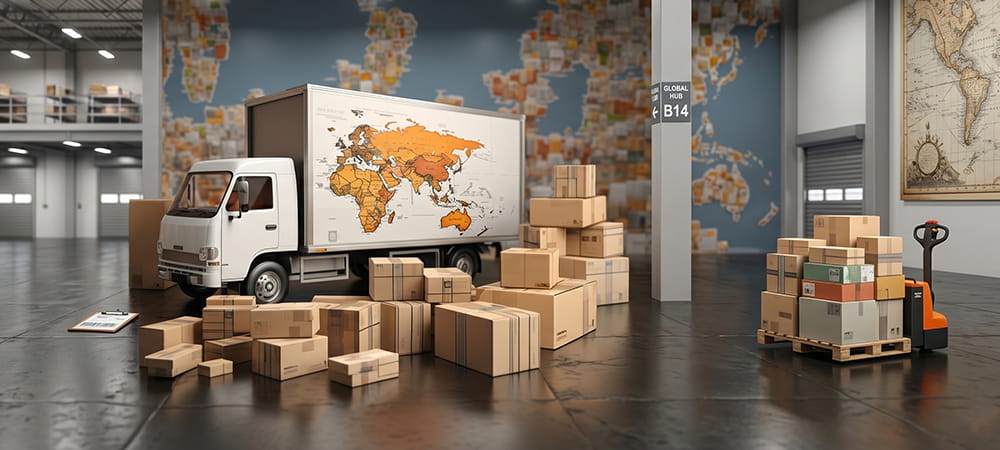
Everyone talks about fashion in terms of design, creativity, and branding.
Collections. Campaigns. Aesthetics.
But there’s one silent factor that determines whether a fashion brand scales globally or stalls quietly in its own market:
Logistics.
A customer can love your product.
They can engage with your brand.
They can even add to cart.
But if delivery takes too long, costs too much, or feels uncertain the purchase rarely completes.
In today’s eCommerce landscape, speed and reliability are no longer operational details. They are conversion drivers.
For many South Asian fashion brands expanding globally, the challenge is not creativity. It’s execution.
Common barriers include:
What begins as strong demand often turns into lost opportunity—not because of product quality, but because the system behind delivery is not built for scale.
Successful global fashion brands share one operational advantage:
they are closer to their customers.
Not just through marketing—but through infrastructure.
By positioning inventory strategically and optimizing fulfillment, they ensure:
And in eCommerce, consistency builds trust. Trust builds repeat sales.
Many fashion brands invest heavily in branding, content, and digital presence.
But growth often stalls when backend systems cannot support demand.
Because in global eCommerce, visibility creates interest—but logistics closes the sale.
This is where 1World Fashion operates differently.
Rather than functioning only as a marketplace, 1World Fashion is built as a multi-layer commerce infrastructure designed to help brands scale globally.
1. Structured Seller Ecosystem
Brands onboard through a dedicated system that supports product listings, inventory management, and order flow in one unified platform.
2. Hybrid Fulfillment Model
1World Fashion enables two operational pathways:
This hybrid structure allows brands to balance speed, scale, and flexibility without operational strain.
3. Multi-Channel Expansion
Beyond its own platform, 1World Fashion enables brands to scale across multiple global marketplaces, including:
This creates a unified backend for multi-channel selling, eliminating the need for separate operational setups.
4. Metadata-Driven Scaling
Instead of manually rebuilding listings for each platform, brands can share structured product data (metadata), allowing faster onboarding and consistent product presentation across channels.
5. Operational Support Layer
From inventory handling to fulfillment coordination, operational processes are streamlined within one ecosystem—allowing brands to focus on design, production, and growth.
In global fashion eCommerce, success is no longer determined only by how good your product looks.
It is determined by how efficiently it moves.
Because at scale,
fashion is not just design—it is delivery.
The brands that will win globally are not just the ones with the best collections.
They are the ones with the best systems behind them.
And that is where the future of fashion is heading—towards integrated, borderless, and logistics-driven commerce.
Explore the 1World Fashion seller ecosystem:
seller.1wfashion.com




 1world Fashion
  April 24, 2026